Meta Reality Labs: Exploring the future of social discovery in VR
During my internship at Meta in the summer of 2020, I teamed up with two other designers to help shape the future of social interactions in virtual reality.
We collaborated with user researchers to uncover VR-specific needs for Messenger and crafted new components to enhance the experience. I played a key role in building a design system that fused Messenger and Oculus principles, testing components in VR, and working with cross-functional teams to refine and perfect our designs.
Problem
People found it difficult to coordinate and communicate with others in VR without getting out of the headset.
Research insights
Connections first
Users preferred seeing their friends first rather than random people in VR. They wanted the experience to prioritize social connections, making it easy to find and interact with people they already knew.

Action-oriented
Users preferred interactions that led to quick, tangible outcomes. They valued features that allowed them to communicate or connect with minimal friction, driving a more direct, action-driven experience.


Situationally flexible
Users wanted their social interactions in VR to be adaptable to different contexts. Whether for casual hangouts or more focused interactions, they desired flexibility in how and when they engaged with others.


Minimal messaging
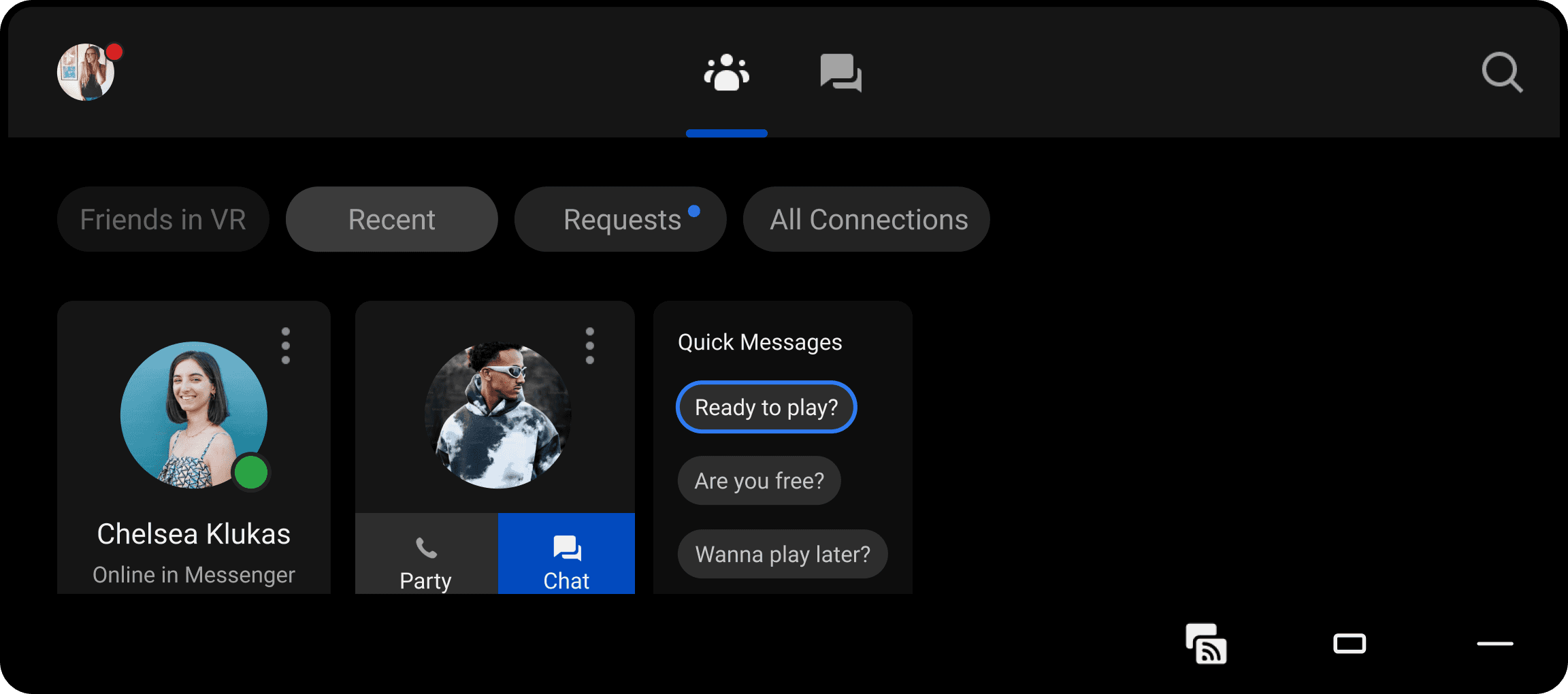
The research revealed that users favored concise, to-the-point messaging in VR, prioritizing quick interactions over lengthy conversations. The design had to reduce clutter and support streamlined communication methods.

Ideate
To gain a deeper understanding of the problem space and prioritize key components, I analyzed existing flows for connecting with friends in VR and proposed targeted improvements to enhance the experience.

Outcome
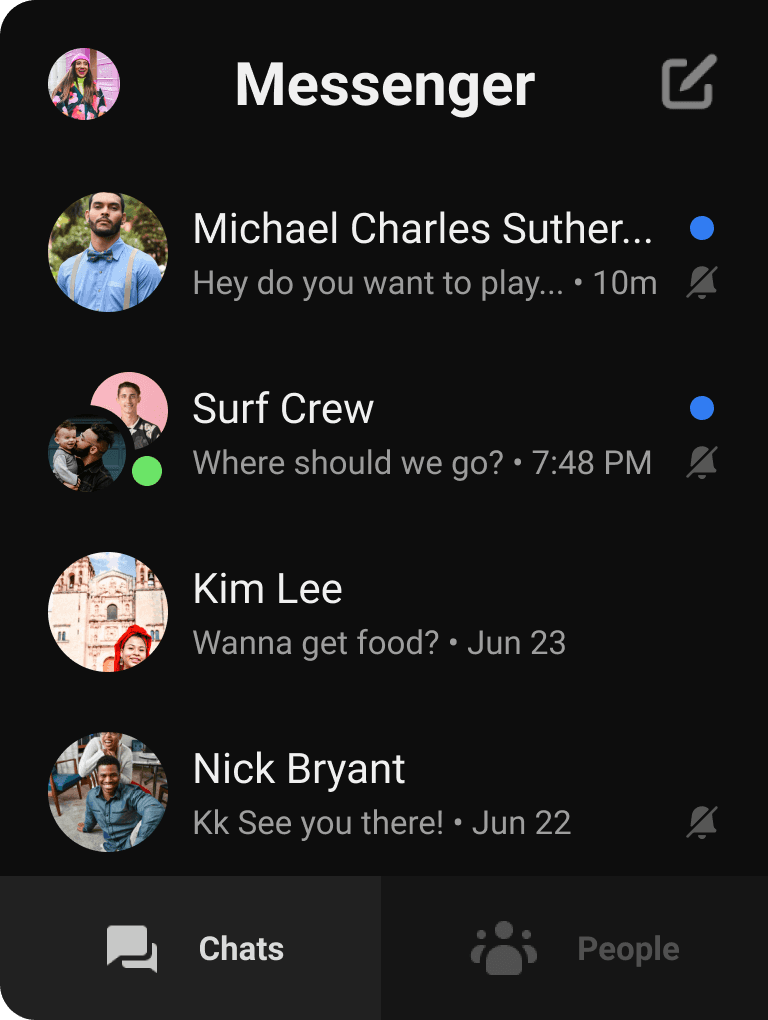
I helped strengthen the foundations of emerging design system, refining core components for spatial interactions and VR constraints. The patterns and components I created (navigation, people list, composer, and chat cells) were adopted by other designers on the team and became building blocks for more complex product flows.